Showing posts with label Chevrolet Volt. Show all posts

Sunday, May 8, 2011

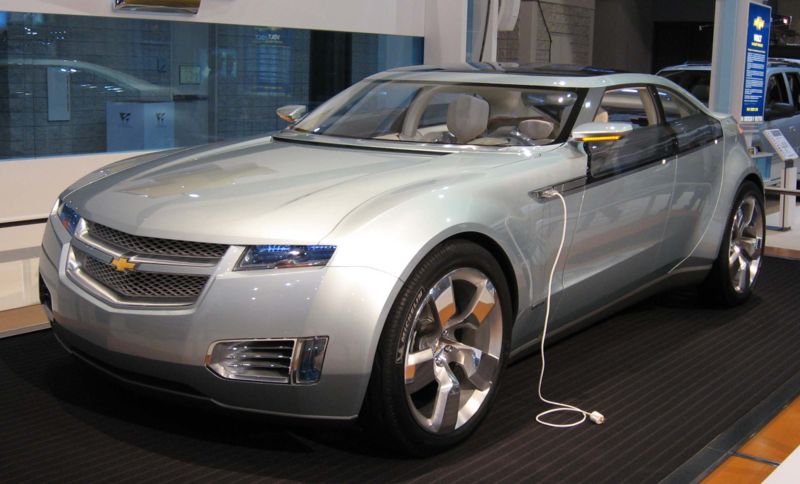
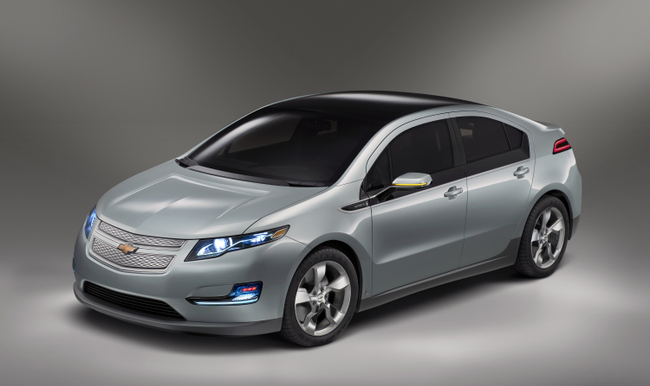
2011 The Chevrolet Volt will initially be released in California

After the first 40 miles a 4 cylinder gasoline/E85-powered engine generator will create on board electricity to a 53kw generator which will enable the Volt to travel a further 300 miles. The power from the generator is sent either to the batteries or the electric motor depending on how much the battery is charged and how much power is required for the car. There are many other features in the Chevrolet Volt as well such as liquid crystal element display, which is completely configurable by the driver along with a seven inch display for viewing vehicle information.

It has a touch screen with climate controls for information and entertainment. There is the provision for an optional navigation system with its own on board hard drive for storing music or whatever you like. There is also a standard Bluetooth device to be used with cell phones and Bluetooth and USB connectivity to enable fast music streaming. The Chevrolet Volt has been scheduled and is expected to be released in late 2010. The price of the car is estimated at around $40,000.

http://1.bp.blogspot.com/-Vl5vL3R1L40/TXEa5p2TtZI/AAAAAAAEGY8/EYlnaTUhebc/s1600/Chevrolet-Volt-Ampera-5.jpg
http://4.bp.blogspot.com/-AduWA7XP5kM/TXEa5arzO2I/AAAAAAAEGY0/mkn2ax0336M/s1600/Chevrolet-Volt-Ampera-6.jpg
In an industry often chided for dragging its feet when it comes to saving the environment, GM has taken a stand to be the champion of the new electric car. Having failed once before in the 1990s with the EV-1, GM is taking a huge risk by promising an as-yet undeveloped car in just two years. GM needs to build the battery to power this revolutionary car. Between engineering and testing, this could constitute a lengthy and expensive process - and the possibility then exists that GM may not follow through on its promise.

In addition to the science of it all, there's the publicity. GM's name hasn't been inspiring trust and building confidence in the past decade. They've been slow to respond to a changing market and suffered through expensive strikes and internal problems. If this special project succeeds, it may be their ticket out of the hole they dug themselves. If it fails, well, at least they would have inspired their competitors to go out and build us a plug-in hybrid.

The Chevrolet Volt is generating a tremendous amount of press. Try this link to follow all the Volt news, see additional pictures, read updates on the Volt's price (recently bumped to $40,000), and eventually find the release date and availability data.

The Volt will initially be released in California, followed by New York, New Jersey, Connecticut, Washington D.C., Michigan and Texas. 12 to 18 months later, nearly all of the 600 Chevy dealers nationwide should be selling the hybrid car, The Volt.


http://4.bp.blogspot.com/-GUdotQHyios/TXEa5t8WsQI/AAAAAAAEGZE/7acwTZsW4JM/s1600/Chevrolet-Volt-Ampera-4.jpg
http://3.bp.blogspot.com/-67btXRBgWkU/TXEa50iobFI/AAAAAAAEGZM/2UsiH5cWth8/s1600/Chevrolet-Volt-Ampera-3.jpg

Monday, May 2, 2011

Chevrolet Begins Taking Orders for Volt in Canada


General Motors is adding Canada to the list of countries that will soon get the Chevrolet Volt as starting from today, the company’s dealers in seven key regions across the country will begin accepting orders for the extended range electric vehicle, with prices starting from at CA$41,545 (equal to US$43,780 at today’s exchange rates). Read more »

Tuesday, April 26, 2011

Chevrolet Volt and Nissan Leaf Receive Top IIHS Safety Ratings in Crash Tests


The Insurance Institute for Highway Safety (IIHS) released the results of the first-ever U.S. crash test evaluations of plug-in electric cars, with the two EVs earning the highest safety ratings. The Chevrolet Volt and Nissan Leaf were awarded the top rating of “good” for front, side, rear and rollover crash protection.

Since both cars are fitted as standard with electronic stability control systems, they also qualified as winners of Top Safety Pick, the Institute's award for state-of-the-art crash protection.

Read more »

Friday, January 28, 2011

Poll: Should GM give in and call the Volt a hybrid?

Apart from the humorous articles and the plethora of eBay finds we come up with, Carscoop’s bread and butter is automotive news straight from the manufacturer. And as such, we read a lot of press releases. In all the ones I’ve read, General Motors refuses to call the Chevrolet Volt a hybrid. It’s a range extended electric vehicle.

I speculate that it might have something to do with hybrids being uncool (so sayeth GM CEO Dan Akerson) or to avoid comparisons with that other hybrid. You know, the one made by the world’s other biggest car manufacturer.

So let’s hear the cases for and against:

Yes, GM should call the Volt a hybrid and here’s why:

A hybrid, by definition, is a vehicle that has two or more powerplants. In most cases, one is an electric motor and the other is a gasoline engine. There’s no requirement that these run in tandem, or be connected to one another in any way. More than one powerplant and you have a hybrid. And let’s face it: GM isn’t trying to lure buyers away from the Nissan Leaf or the Mitsubishi iMiev; their target is and always has been the Toyota Prius. And what’s the Prius, children? “A hybrid!” In a dumbed down worldview, nobody wanted to buy a Saturn Green Line so this was Option B. The Volt looks like a hybrid, is mechanically like a hybrid and was designed to compete with hybrids. For this, the Volt is one and the same.

No, GM should call the Volt a range extended electric vehicle and here’s why:

The Prius uses its electric motor at low speeds, when idling and when overtaking. The rest of the time it’s running on its gasoline engine alone. On the other hand, the Volt engages its gasoline engine only when its electric motor has run out of juice. Like a WWII submarine limping home on its diesel engines after its batteries have run dry. So if anything, the Volt is like a Nissan Leaf with the added security of a gasoline engine making sure you don’t end up on the hard shoulder, waiting for the AAA man to come along with a very long extension cord. For this, the Volt is a range extended electric vehicle.

So where do you stand? Do you buy GM’s marketing buzz or do you side with the cynics? Cast your vote and leave us a comment.


Thursday, January 27, 2011

Proposed Bill to Increase Number of Plug-in Hybrid and EVs Eligible for Federal Tax Rebate

Michigan congressmen Sander Levin and Carl Levin proposed a new piece of legislation on Wednesday, which would potentially increase the number of plug-in hybrid and electric vehicles eligible for the $7,500 tax credit from 200,000 to 500,000 per manufacturer.

“Green vehicles represent the vanguard of automotive innovation, but they have to be economical for consumers and profitable for manufacturers”, Sander Levin said in a statement. “Raising the cap on this credit will help carmakers reach the demand and production scale necessary for long-term viability," he added.

The bill was presented just one day after President Barack Obama reiterated the government's commitment to put 1 million eco-friendly vehicles on the road by 2015.

Introduced via the Recovery Act of February 2009, the current tax incentive applies to five vehicles – Chevrolet Volt, Tesla Roadster, Nissan Leaf, Coda sedan and Wheego LiFe –, with a per-manufacturer cap of 200,000 units.

The increased number of eligible cars should help keep EV and hybrid sales on track, as many of them are simply too expensive without the applied federal tax rebate. For example, the Chevrolet Volt sells for $41,000 (delivery included) before the tax break.

Additionally, the White House wants to take one step further and convert the $7,500 tax cut, which applies after the vehicle was bought, into a rebate that customers could use at the time of purchase.

President Obama also promised increased federal grants by as much as 30% for companies researching and developing batteries and electric drivetrains.

“With more research and incentives, we can break our dependence on oil with biofuels, and become the first country to have a million electric vehicles on the road by 2015”, Obama said in his State of the Union Address.

Last but not least, the U.S. administration is offering separate $10 million grants for as many as 30 cities across the country, which will be invested into public charging stations, electrified parking space access and fleet conversions.


EV Owners in California to Feel the Shock of Higher Electricity Rates

Woe betide the electric car. Outpaced by their petrol-powered cousins in the 1900s, saddled with heavy and potentially dangerous batteries in the 1970s and crushed in the name of the Almighty Dollar in the 1990s, it’s been a rough road from there to here.

And now, on the dawn of a new age where electric cars seem poised to take their rightful place alongside gasoline cars, the electricity companies are about to throw a wrench into the works. If you live in California and intend to buy a plug-in hybrid Toyota Prius or Chevrolet Volt or an all-electric Nissan Leaf, you could be in for a...shock.

If the energy giants have their way, the Chevy Cobalt, which would have to rate on my list as one of the least desirable cars built by GM, is more economical to own or operate than any of the above. The reason?

Essentially, The California government has approved its energy providers to impose higher rates on customers who exceed, “typical household levels” of energy use all in the name of conservation. So if, for example, you spend eight hours a night recharging your electric car, you’ll find yourself classed as one of these excess customers.

Wham, bam, the electricity companies charge you more than Mr. Joe Public next door who drives a Toyota Sienna and still has to pay for the good oil. And contrary to what you may of heard, it doesn’t matter if you recharge your car at night when the rates are lower; you’re still gonna take a hit to your hip pocket.

And it’s not like the California legislature is rushing to correct this oversight.

Wally Tyner, the James and Lois Ackerman Professor of Agricultural Economics, said that to make the Volt more economical than the Prius or the Cobalt, oil prices would have rise to between $171 and $254 per barrel, depending on which electricity pricing system is being used. Californians for example, pay an average of 14.42 cents per kilowatt hour, which is about 35 percent higher than the national average.

"People who view the Volt as green will pay $10,000 more over the lifetime of the car because it's green," Tyner said. "Most consumers will look at the numbers and won't pay that.

So until you’ve taken a pen and paper and worked out the real cost of owning an EV in California, maybe keep that Geo Metro for a while longer.


Saturday, October 9, 2010

chevrolet volt

chevrolet volt
chevrolet volt
chevrolet volt images
chevrolet volt pictures
chevrolet volt
chevrolet volt
chevrolet volt images